
How to pray
How often should I pray for something?
· 3 min read
How often should I pray for something? What Jesus taught about persistent prayer, which requests to pray daily, weekly, or monthly, and how to avoid burnout.
How often you should pray for something depends on the need, but Jesus is clear that we should keep praying and not give up. An urgent need might come to God every day. A long-term concern might come up once a week or once a month, for years. What matters is that you keep bringing it to Him.
How often should I pray for the same request?
Pray for the same request as often as the need calls for, and keep praying until the need is met or God makes His answer clear. Urgent needs, like a surgery this week, can come up daily. Ongoing needs, like a friend’s job search, can come up weekly. Long-term concerns, like a missionary’s work, can come up monthly. Persistence is what Jesus asks, not a set number of prayers.
What does Jesus teach about persistent prayer?
Jesus taught persistent prayer through the parable of the widow who kept coming to an unjust judge until he gave her justice. Luke tells us why He told it: “to the effect that they ought always to pray and not lose heart” (Luke 18:1, ESV). Then Jesus asked, “And will not God give justice to his elect, who cry to him day and night?” (Luke 18:7, ESV).
The point of the parable is not that God is reluctant like the judge. It is the opposite. If an unjust judge gives in to persistence, how much more will a loving Father hear His children. Jesus also warned against thinking we will “be heard for their many words” (Matthew 6:7, ESV). Persistent prayer is trust, not a way to wear God down.
Which requests are daily, weekly, or monthly?
A simple rhythm for prayer requests matches how often you pray to how close and how urgent the need is:
- Daily: your spouse and children, close family, and anyone facing something this week, like a surgery, an interview, or a hard conversation.
- Weekly: friends, your church and its leaders, coworkers, and ongoing needs like a job search or a long illness.
- Monthly: missionaries, countries, leaders in authority (1 Timothy 2:1-2), and people you see less often.
- On a set date: a birthday, an anniversary of a loss, or a monthly appointment.
The rhythm can change. A weekly request can move to daily when something urgent happens, then back again.
How do I pray for many people without burning out?
Praying for many people stays sustainable when you don’t try to pray for everyone every day. Spread your requests across the week so each day’s list takes a few minutes. Pray specifically for a few people well, instead of rushing through a long list. When you miss a day, start again the next day without guilt. God’s “mercies never come to an end; they are new every morning” (Lamentations 3:22-23, ESV).
For ways to build the habit itself, see how to pray daily. For keeping requests organized, see how to keep track of prayer requests.
How do I set how often a prayer comes up in The Pray App?
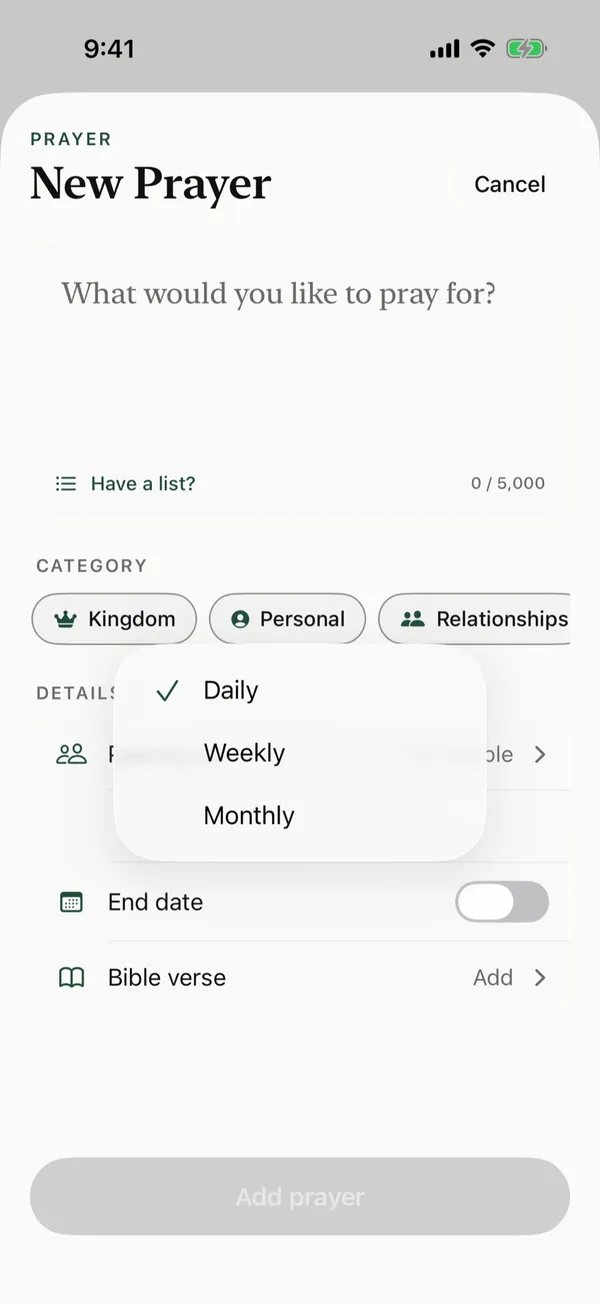
The Pray App lets you choose how often each prayer card comes up. Start a new card with New prayer card, or open one from Manage. Under Details, tap Repeat and choose:
- Daily for a card that comes up every day.
- Weekly, then tap the day of the week.
- Monthly, then tap each date you want, from 1 to 31.
To stop praying for it on a set day, turn on End date and pick the date. Tap Add prayer, or Save for a card you already have.
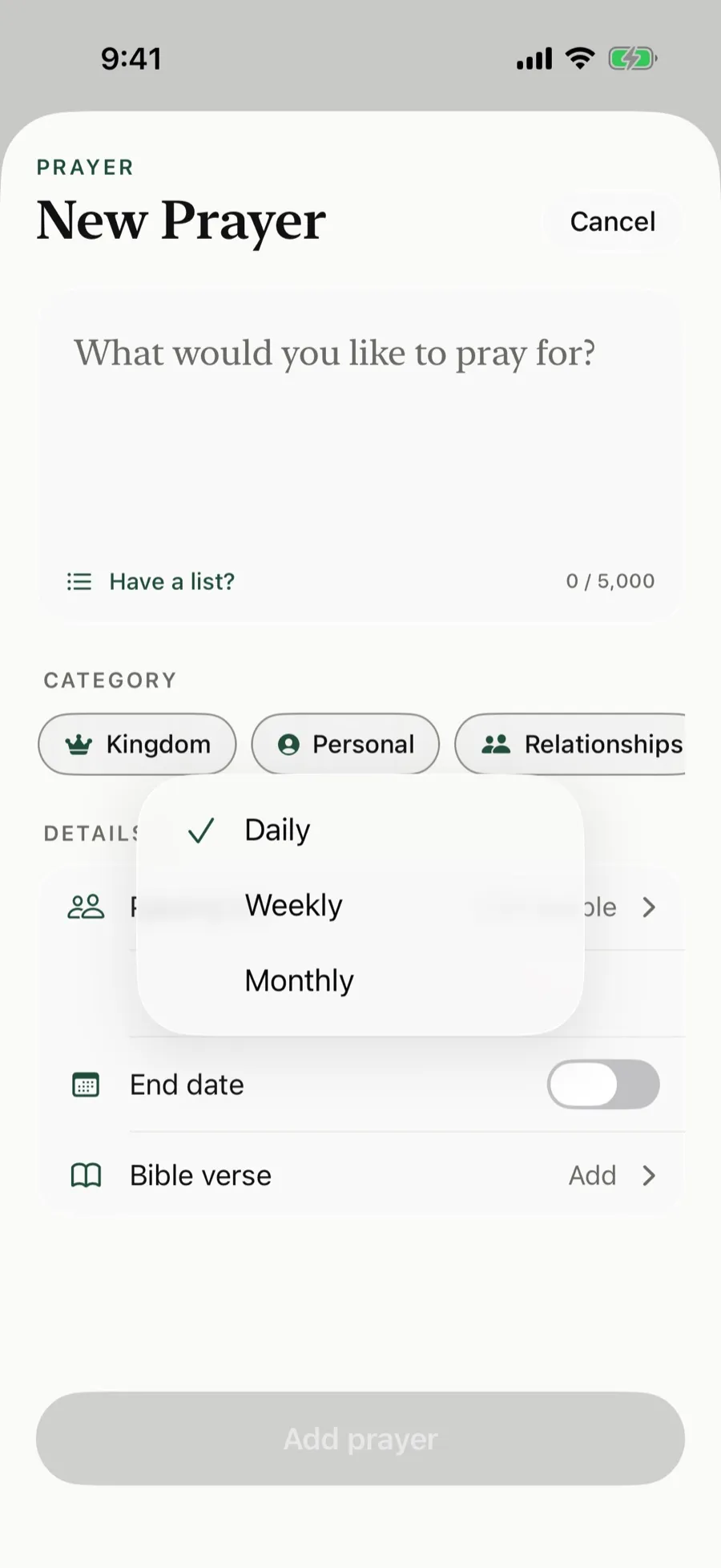 Repeat sets each prayer card to Daily, Weekly, or Monthly.
Each day, Today on Home lists only the cards that are due, so a weekly card comes up on its day and a monthly card on each date you picked.
The Pray App is free on the App Store. See how to choose how often a prayer comes up.
Questions people ask
Is it okay to pray for the same thing every day?
Yes. Jesus told the parable of the persistent widow so His disciples would keep praying and not lose heart (Luke 18:1-8). Praying again for the same need is a sign of trust, not a lack of faith.
Does praying more often make God more likely to answer?
No. Jesus warned against thinking we will be heard for our many words (Matthew 6:7). We pray often because we depend on God, not to earn an answer.
How do I decide how often to pray for each request?
Match the rhythm to the need. Pray daily for urgent needs and the people closest to you, weekly for friends, church, and work, and monthly for missionaries and wider concerns.
Related guides
- How to pray with your kids, at bedtime and every dayHow to teach your kids to pray, a simple pattern they can remember, bedtime prayers, praying a blessing over them, and ideas for every age.
- The ACTS prayer method, a simple guide with examplesThe ACTS prayer method explained, adoration, confession, thanksgiving, and supplication, with a short example of each and Scripture to pray.
- Advent prayers for each week, for you and your familyAdvent prayers for each week of Advent 2026, Scripture to read from God's promises to Christ's return, and simple ways for a family to pray toward Christmas.
- Bible verses about prayer to encourage you to prayBible verses about prayer, grouped by theme, on why to pray, how to pray, praying with faith, and God hearing our prayers, with short notes.